LAF, RAF, Chaise, Corner: DreamSofa Decodes the Sectional Vocabulary Behind Most Layout Regret
BEVERLY HILLS, CA, UNITED STATES, August 22, 2026 /EINPresswire.com/ -- Sectionals have become the default primary

Press Release Disclaimer: This is a press release distributed through the XPR Media network. It has not been independently verified by our newsroom.
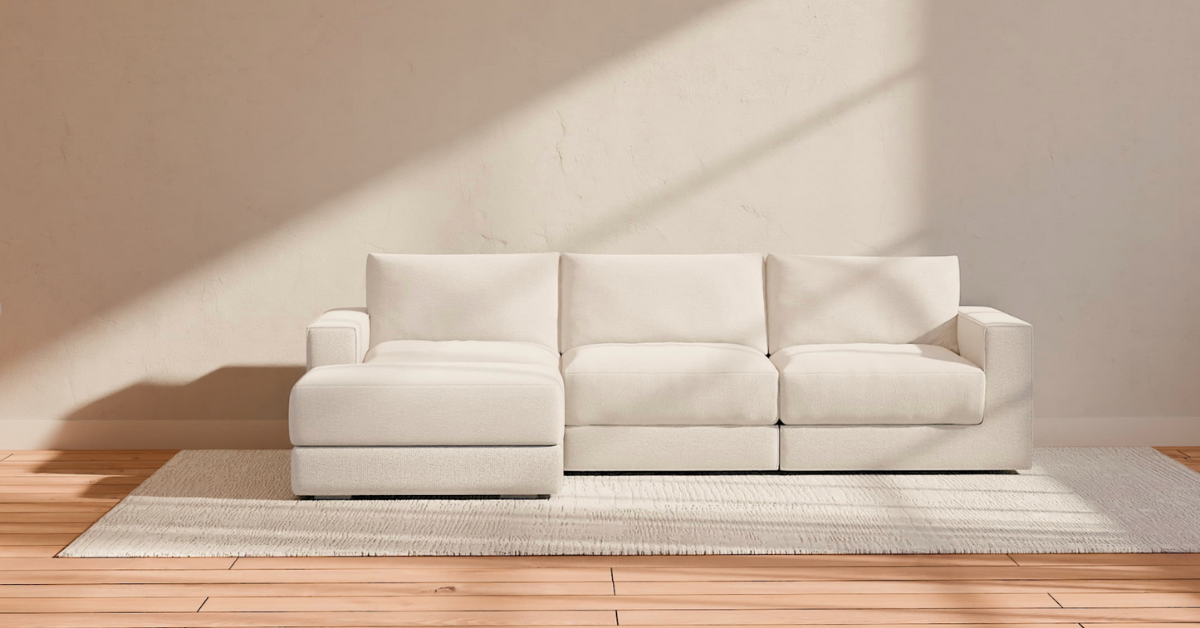

BEVERLY HILLS, CA, UNITED STATES, August 22, 2026 /EINPresswire.com/ — Sectionals have become the default primary seating in a large share of American living rooms, and with them has come a vocabulary that manufacturers use consistently and buyers encounter for the first time at checkout: LAF, RAF, armless, wedge, bumper, chaise, console. DreamSofa, a direct-to-consumer custom furniture manufacturer, says the resulting confusion is a leading and entirely avoidable cause of layout disappointment, and has published a glossary and planning guide for buyers configuring a sectional for the first time.
“A sectional is the only furniture purchase where you can get every decision right and still end up with the chaise on the wrong side of the room,” said a DreamSofa spokesperson. “It’s not a design failure. It’s a vocabulary failure, and it costs people a lot of money and a lot of freight.”
The Terms, Defined
The guide starts with the orientation convention that generates the most errors. Left-arm-facing and right-arm-facing describe which arm the piece has when the viewer is facing the furniture — not the direction the piece faces, and not the sitter’s left or right. A left-arm-facing chaise has its arm on the viewer’s left as they look at the sofa. The guide advises buyers to disregard the abbreviation entirely and instead confirm the orientation with a plan-view drawing or a rendered image before ordering, since manufacturers occasionally describe the same piece from the seated perspective.
From there it defines the component vocabulary: armless pieces that fill the middle of a run; corner or wedge pieces that turn a ninety-degree angle, with wedges producing a diagonal seat and squared corners producing a deeper turn; chaise sections, which extend seat depth for reclining at one end; bumper sections, lower and shorter than a chaise; ottomans that either float or lock into a run to form an L or U; and console pieces that add storage or surface between seats. The guide notes that these components imply different total footprints for the same nominal seat count, which is why comparing sectionals by seat count alone misleads.
The Clearances That Decide the Layout
Configuration errors, the guide argues, are usually clearance errors. It sets out the working figures designers use: primary walkways generally want somewhere in the range of thirty to thirty-six inches, secondary paths can compress toward two feet, and the gap between seat front and coffee table sits comfortably around fourteen to eighteen inches — close enough to reach, far enough to pass. A sectional that satisfies each of these individually can still fail collectively in a room with two doorways and a traffic path through the middle.
Sightlines are the second constraint. A chaise placed on the wall side of a room reads as generous; the same chaise placed on the entry side blocks the path and cuts the room in half. Television and window placement determine which orientation produces comfortable viewing angles from every seat rather than from one. Where a sectional is used to zone an open-plan space — a practice the company has documented among designers and, more recently, in hybrid-work households — the open-backed side becomes a visible surface and should be specified accordingly.
Entryway Ergonomics: The Constraint Discovered Last
The guide gives particular attention to what DreamSofa calls entryway ergonomics — the discipline of getting a large piece into the room it was bought for. Standard interior doorways are commonly around thirty to thirty-two inches wide, while conventional sofa depths run well beyond that, which means most sofas enter a home on a diagonal, through a route that includes stair turns, elevator dimensions, hallway pinch points, and ceiling height at landings. The company advises buyers to measure the narrowest point of the entire path, including the diagonal of any turn, before selecting a configuration.
This constraint is where modular construction changes the calculation. DreamSofa builds its sectionals on DreamModular, its tool-free reconfigurable system, in which sections arrive and move as individual pieces and connect at what the company calls aerospace-grade connection points — hardware it specifies for repeated engagement and disengagement rather than one-time assembly. The practical consequence, the company says, is that entryway constraints stop determining which sofa a household can own, and that a configuration decision made today is reversible when the room, the household, or the address changes.
Modular or Fixed: The Decision Behind the Decision
Before orientation, the guide argues, buyers should settle a prior question that most listings blur: whether the sectional is a fixed assembly or a genuinely modular one. Many pieces sold as sectionals are two or three fixed components joined by brackets in one predetermined arrangement — an L that is only ever an L. A modular system is composed of independent sections that can be re-ordered into different shapes, added to, or separated entirely.
The distinction has consequences beyond flexibility. Fixed sectionals are typically cheaper and can be marginally more rigid at the seam, but they commit the household to one floor plan and one room. Modular systems accommodate the changes that actually happen — a move, a new television wall, a household that grows or contracts, a room that acquires a desk — and they can be carried in sections through access that a fixed piece cannot clear. The guide notes that modular construction also changes what a damaged or worn section means: a single unit can be recovered or replaced rather than the whole run.
The specification that matters in a modular system is the hardware. Connections that are engaged once at assembly can be simple; connections engaged and disengaged repeatedly over years need to be built for the cycle count. DreamSofa specifies what it calls aerospace-grade connection points across DreamModular for that reason, and notes that buyers can test the claim easily on any system by separating and rejoining two sections several times and observing whether the fit stays tight.
Testing the Configuration Before It Is Built
The guide’s last recommendation is to stop configuring on paper. Buyers can mark the full footprint on the floor with painter’s tape, including the chaise return, and live inside the outline for several days — walking the paths, opening the doors, checking whether the tape crosses a heating vent or a floor outlet. For a more precise preview, DreamSofa points to DreamStudio, its AI-powered 3D and AR tool, which renders a specified configuration at scale in the buyer’s own room and allows orientations to be swapped before anything is manufactured. The company says configuration changes made at the visualization stage are the least expensive changes available in the entire process, and that a meaningful share of orders change orientation after buyers see the piece in place.
Dimensional fit itself is specified through FlexForm Sizing, the company’s to-the-inch manufacturing program, which it says addresses the second-most-common sectional complaint after orientation: a piece that is correct in configuration but four inches too long for the wall it was intended for.
“Every one of these mistakes is made at the last possible moment, under time pressure, using words nobody explained,” the spokesperson said. “The furniture industry invented this vocabulary. The least it can do is publish the dictionary.”
About DreamSofa
DreamSofa is a direct-to-consumer custom furniture manufacturer specializing in made-to-order sofas, sectionals, modular seating systems, and sleeper sofas built on kiln-dried solid wood frames. Its DreamModular sectionals connect tool-free and are dimensioned per order through the FlexForm Sizing system, with configurations testable in advance using the DreamStudio 3D and AR tool. Every piece is backed by a lifetime frame warranty and a 100-day home trial. More information is available at www.DreamSofa.com.
Media Contact DreamSofa Media Relations press@dreamsofa.com
Sectional terminology, clearance guidance, and doorway dimensions referenced above reflect commonly published furniture and interior design conventions and vary by manufacturer and building. This press release otherwise describes DreamSofa’s own products and customer observations.
Maria Gonzalez
MGP
email us here
Legal Disclaimer:
EIN Presswire provides this news content “as is” without warranty of any kind. We do not accept any responsibility or liability
for the accuracy, content, images, videos, licenses, completeness, legality, or reliability of the information contained in this
article. If you have any complaints or copyright issues related to this article, kindly contact the author above.

Media gallery